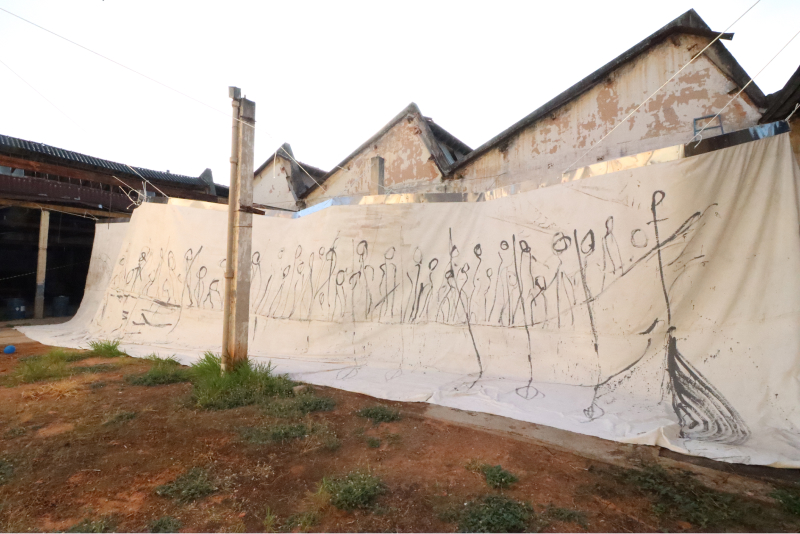
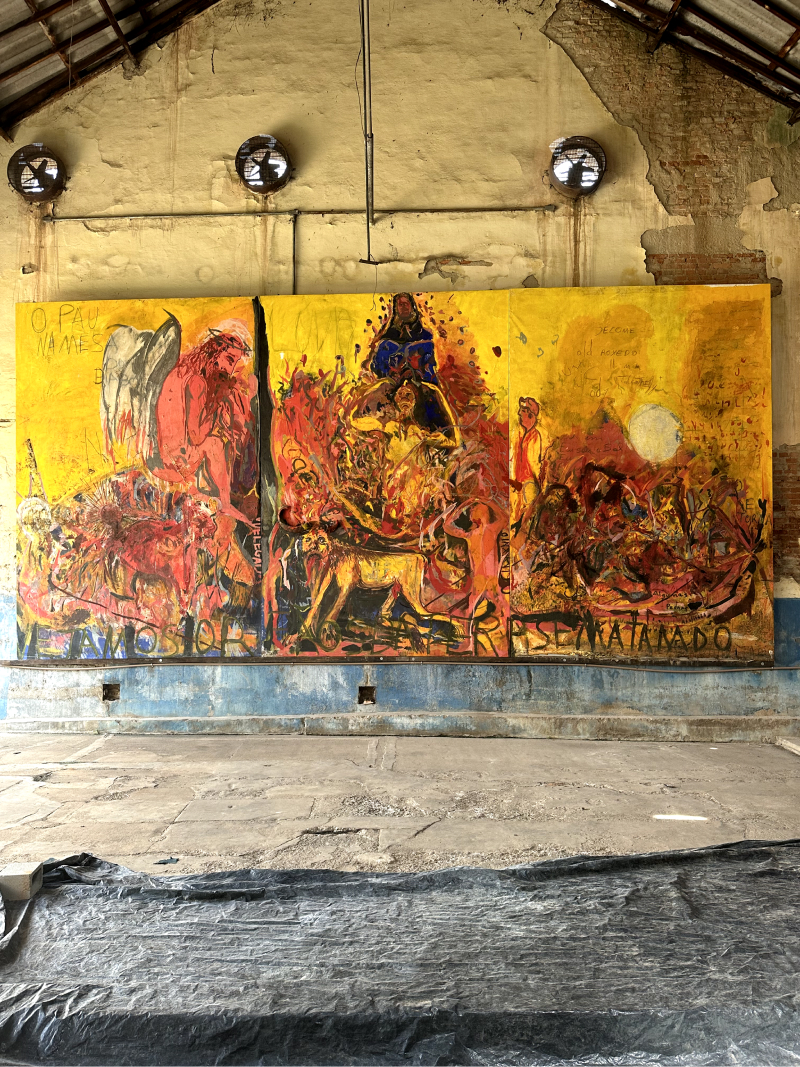
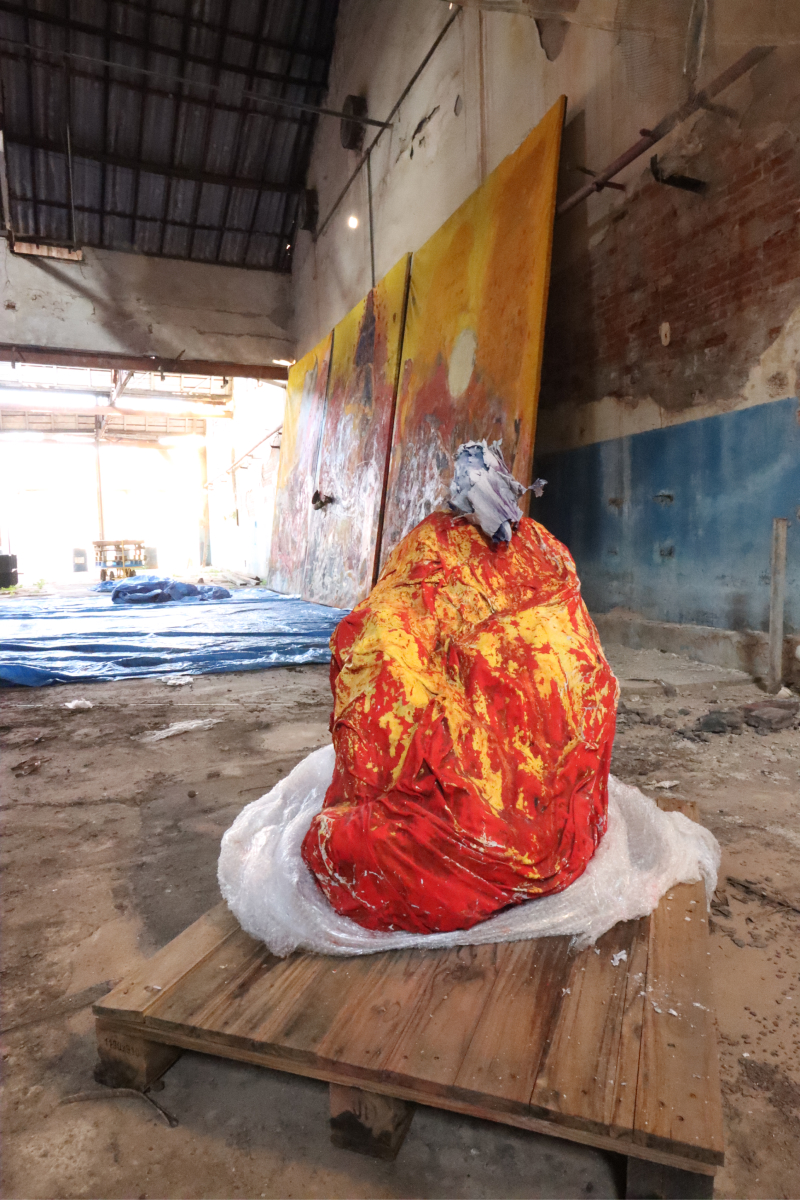
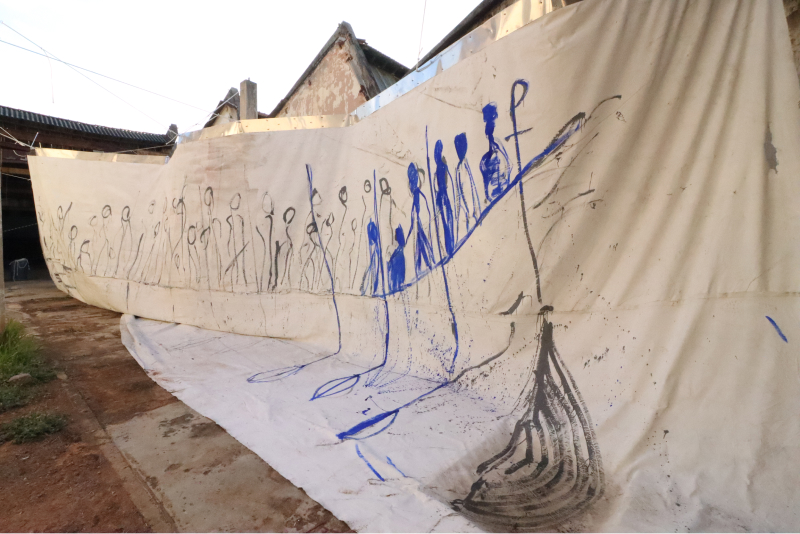
The art experience in situ War emerged as a field where I could experience existing works as actors in a scene, in a battle, in a song. I expanded my notion of gesture as a creative act to a more radical extent with Gilgamesh, where the destructive gesture of chance and the constructive one of the other became part of the work. In The Boat, I was able to experience an architectural dimension where the experience of removing the painting from the canvas was taken to a new limit, tested, and experienced with the forest builders in a studio situation. There was also in this work a profound spiritual relationship with the past of the space that houses it.
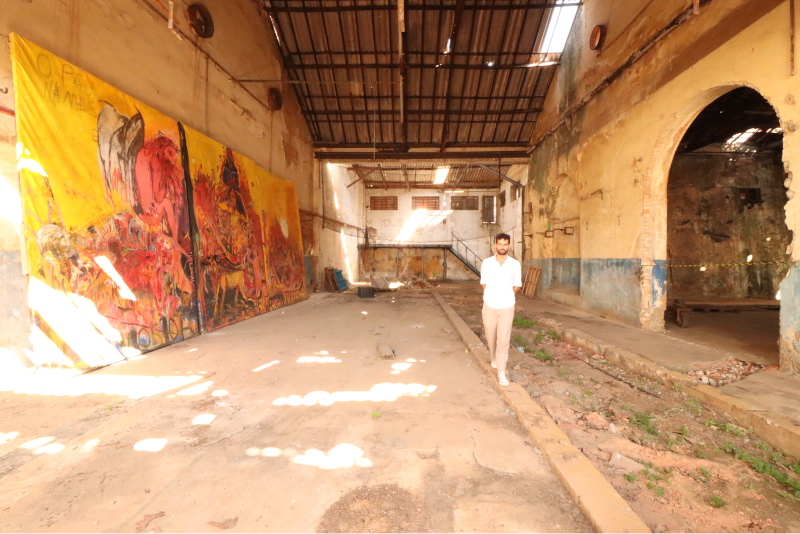
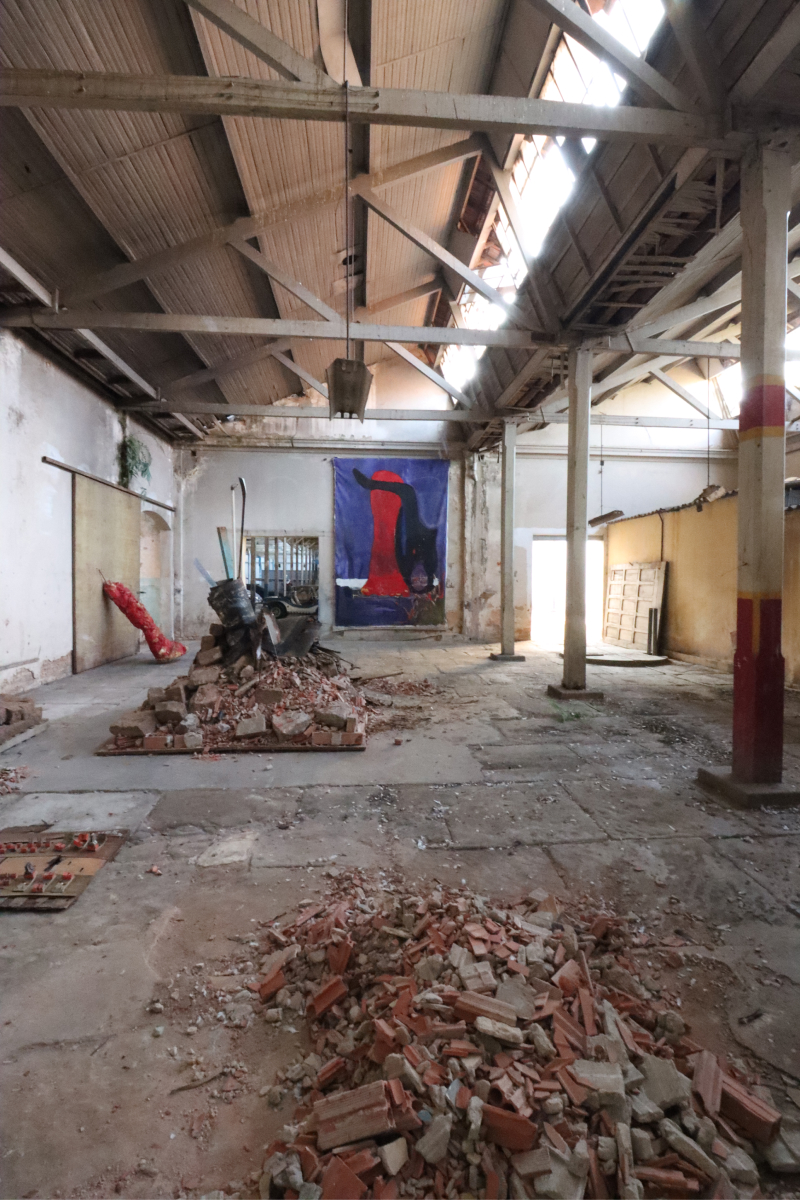
The relationship with the decrepit space I chose brought hardships such as the impossibility of public visitation in the museum’s schedule, but at the same time, it made my gesturality absolutely free. I could knock down walls, remove parts of the roof, break the floor, drill, hammer, break, destroy, preserve, and create without any bureaucracy.
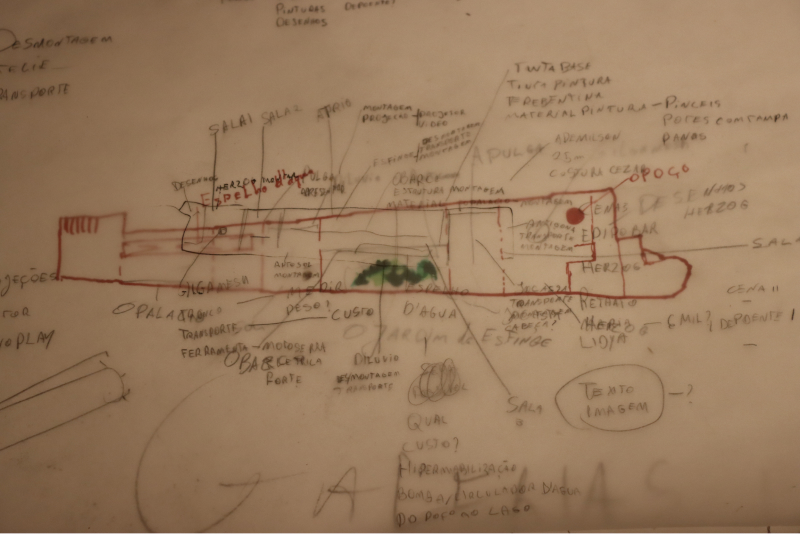
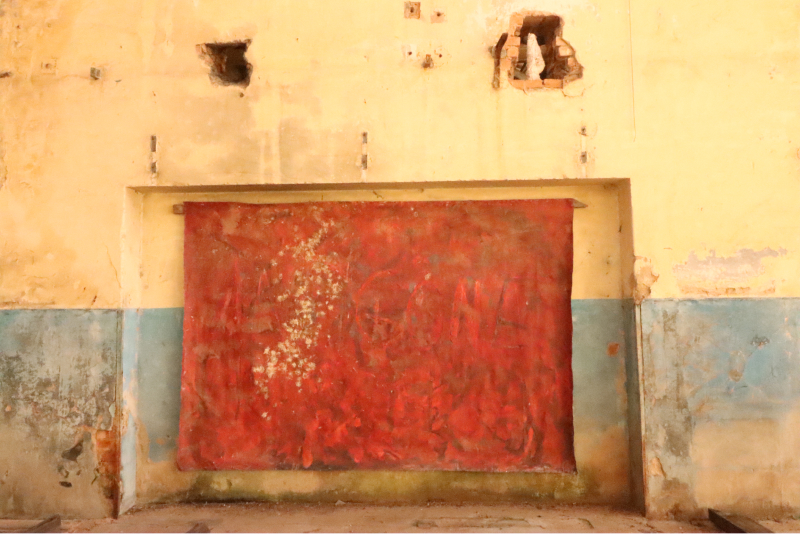
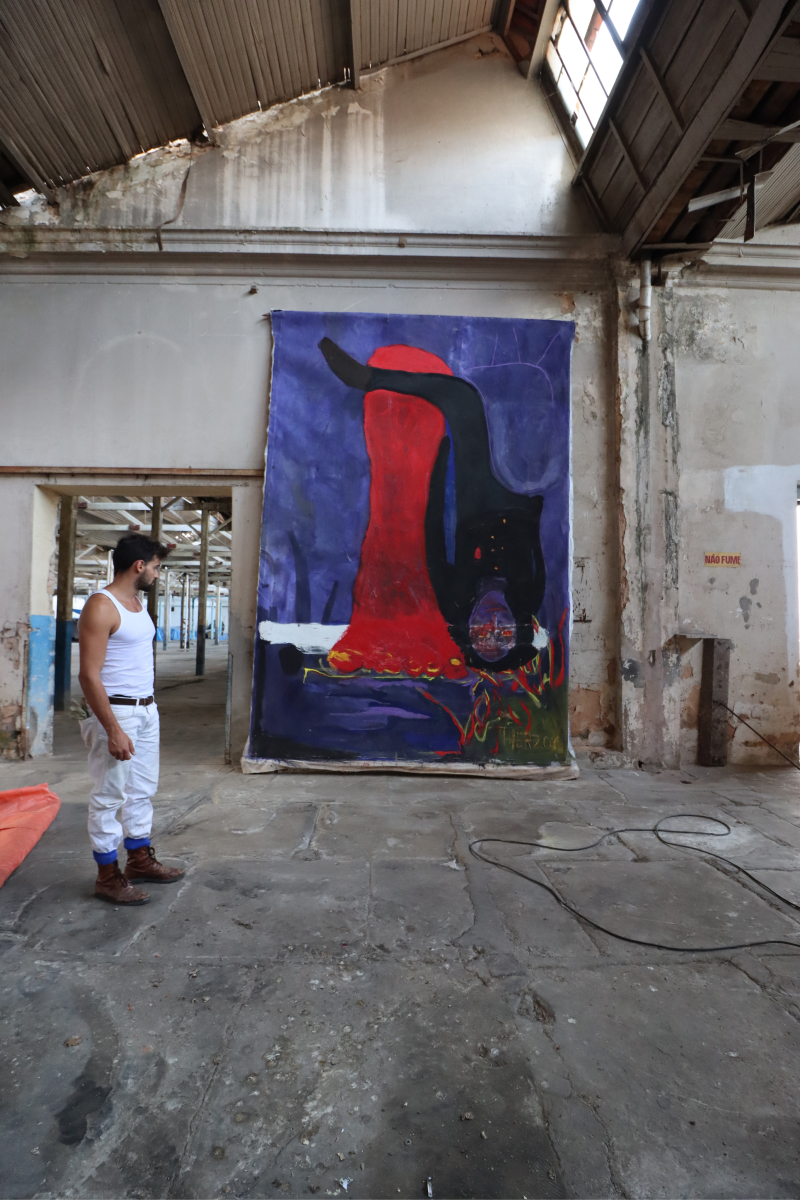
I could understand that the monumental works I produce can coexist in an exhibition as actors in a show, and this fascinated me to a limit not yet fully understood. Herzog coexists with ÉdipoPé and Gilgamesh in a room where there is a well, pigeon nests, and the museum’s security center. The Flea is in a room where the imminent collapse of the ceiling is almost certain to the point where the two entrances to the room are closed with signaling tape. The Boat was installed in the area where the boilers of the textile industry that operated there were originally housed, so the entire floor below the boat is taken over by underground tanks still full of water. The Flood, Antigone, Jocasta, Saint George, and the Sphinx interact closely in a covered area but with some missing tiles, which creates scenic lighting at specific times of the day.